THE SPRING
Twist it tighter
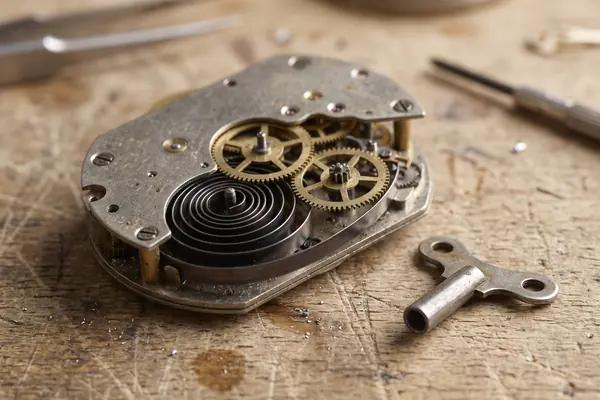
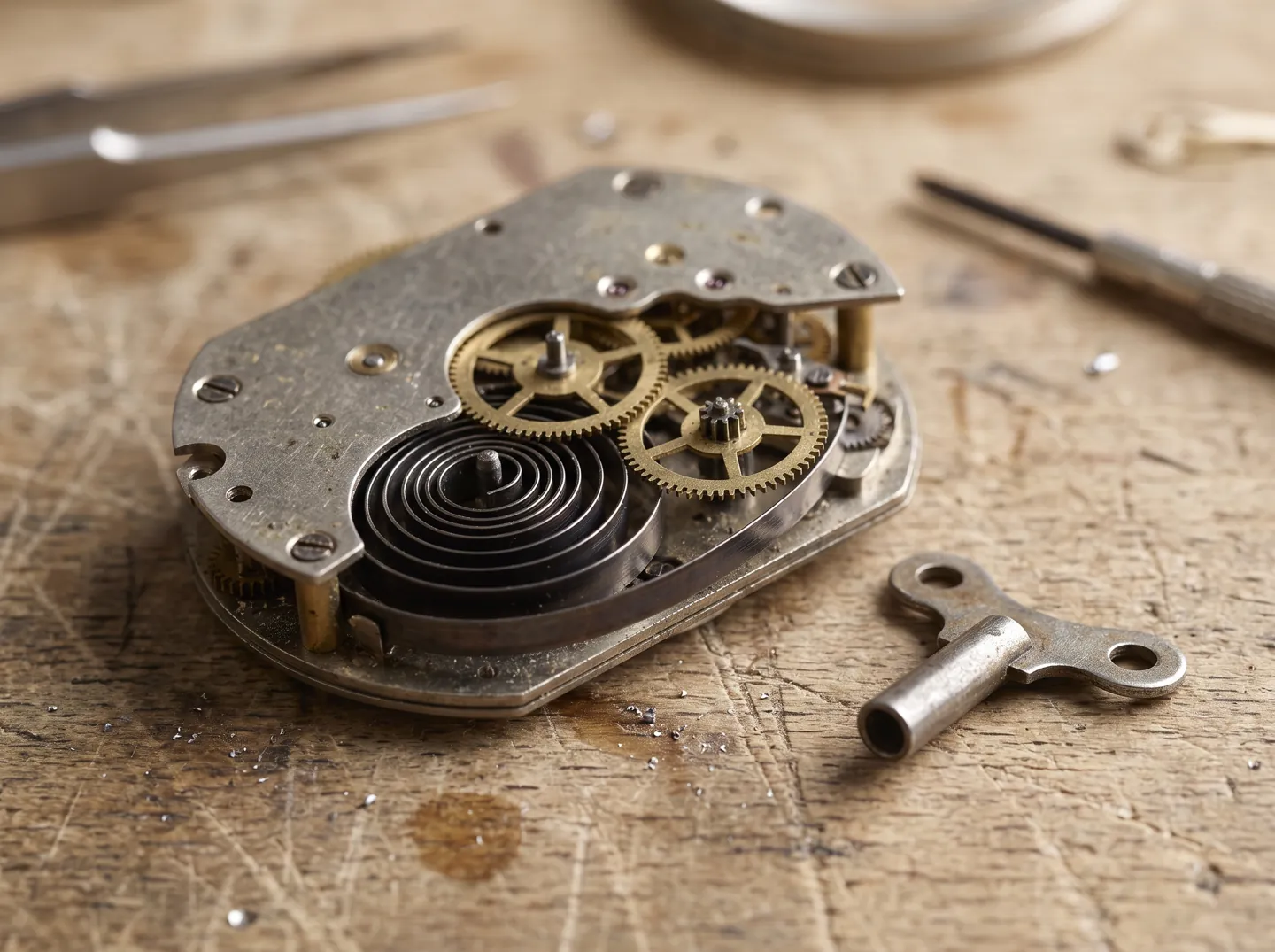
Turning the key twists a spiral spring of steel ribbon tighter. As it unwinds, its force turns the wheels until the toy runs down.
Follow the spring drummertoy
HOW CLOCKWORK WORKS
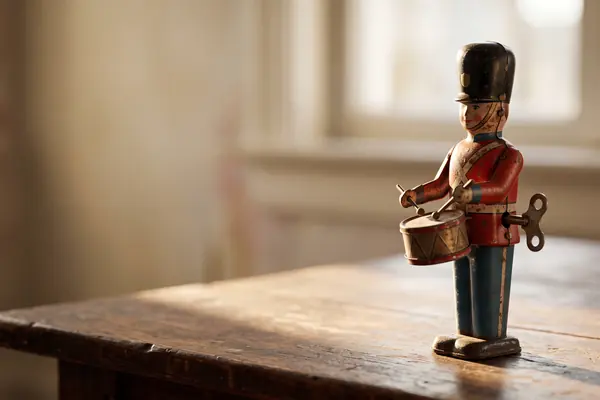
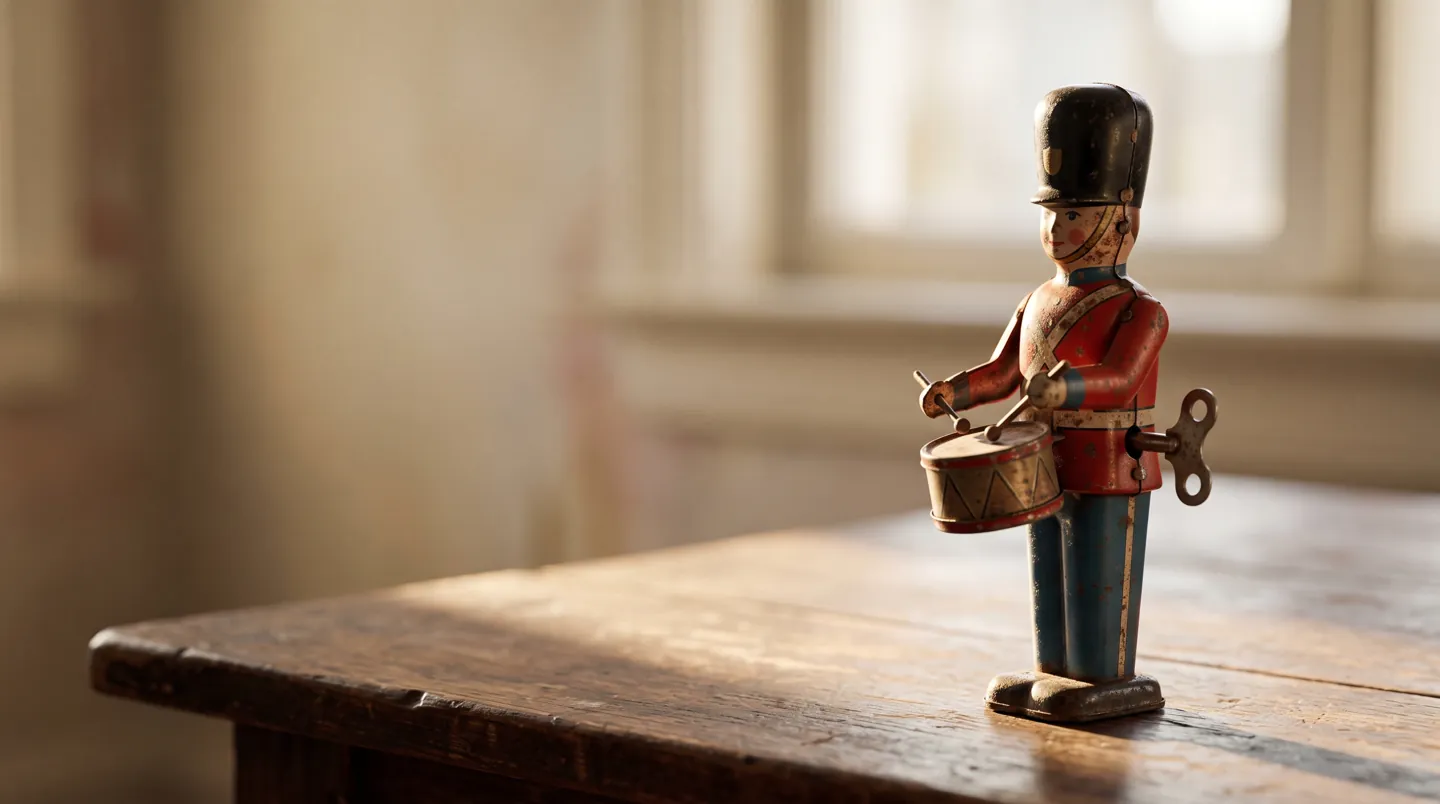
A few turns of a key, and a tin drummer starts to play.
1850s spring-driven tin toys
1850s When spring-driven tin toys began in Germany
The energy sits in a coiled steel ribbon called a mainspring. Clocks, music boxes and kitchen timers use the same idea, and toymakers in 19th-century Germany turned it into a whole industry.
THE SHORT ANSWER
Wind-up toys run on stored energy.
No batteries, no plug, just a coiled spring.
THE SPRING
Turning the key twists a spiral spring of steel ribbon tighter. As it unwinds, its force turns the wheels until the toy runs down.
Follow the springTHE CLICK
Every winding mechanism has a ratchet and a pawl, which clockmakers call the click. It stops the spring unwinding back through the key.
Look closerTHE TIN
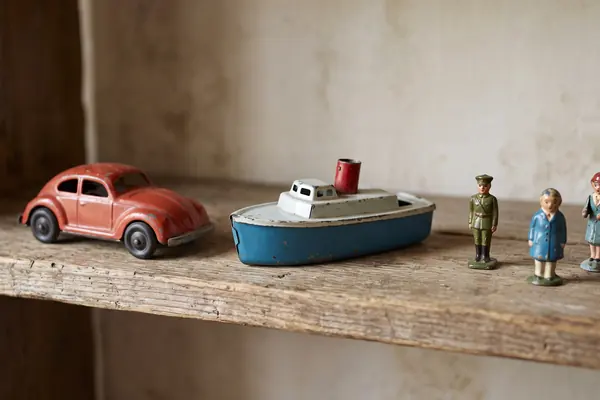
Tin toys are thin steel sheets plated with tin. From the late 1880s, designs were printed onto the metal, then shaped and joined with small tabs.
See the historyFOLLOW THE SPRING
Pick a moment in a wind-up toy's life to see what the mainspring is doing. The bar shows how much energy the spring is holding.
Based on how mainspring mechanisms work in clocks, music boxes and wind-up toys.
CLUES ON AN OLD TIN TOY
Old tin toys carry clues to when they were made. None of these dates a toy on its own, but together they help tell the story.
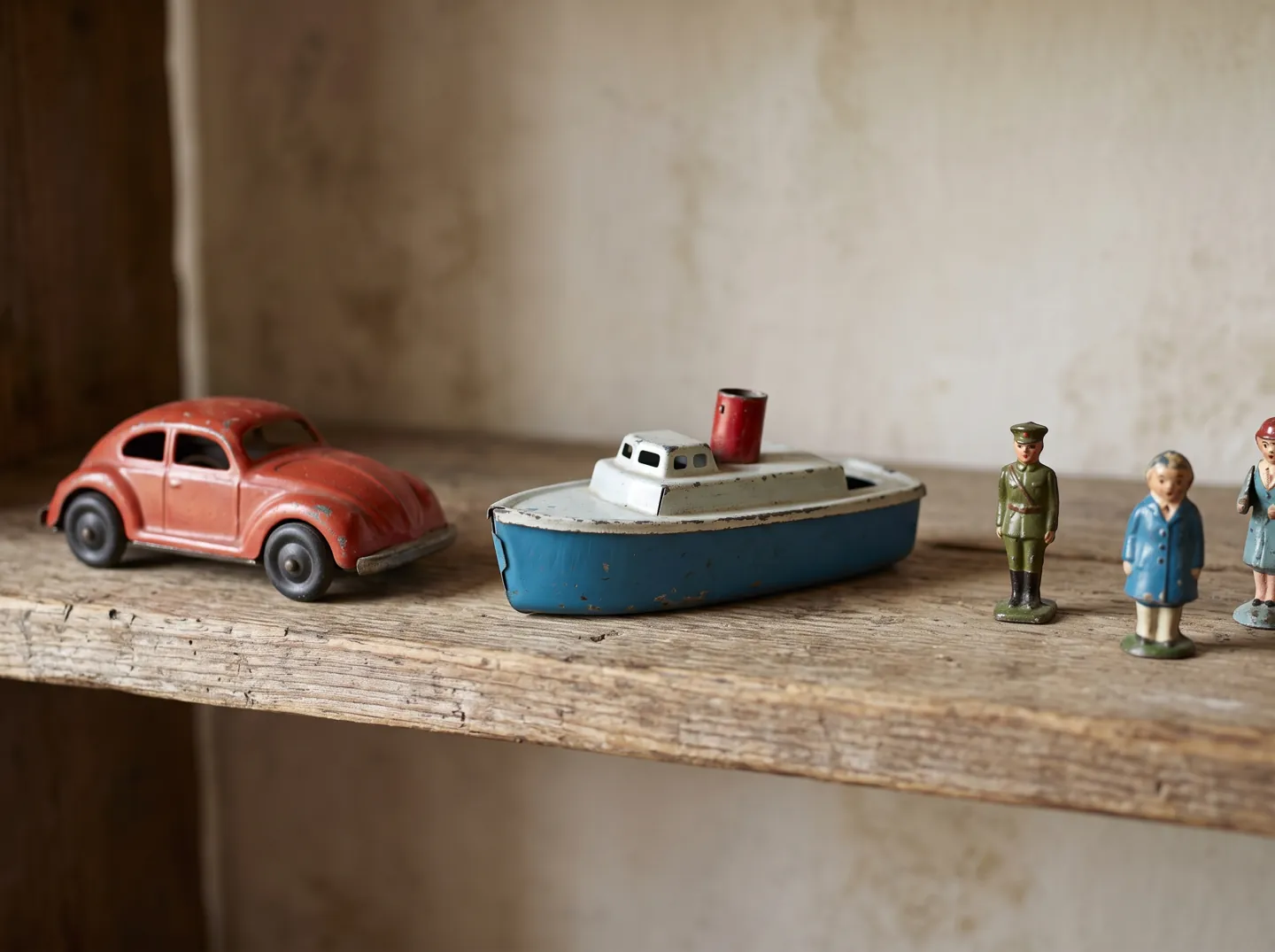
Early tin toys were assembled and painted by hand. From the late 1880s, designs were printed onto the tinplate by lithography.
Printed toys were shaped in dies and assembled with small metal tabs.
The V&A says toys made in the late 1940s in Germany were marked 'US Zone Germany'.
In the 1960s cheaper plastic and new safety rules ended the heyday of tin toys, so plastic parts may hint at a later toy.
TWO NUMBERS WORTH KNOWING
One date for the first spring toys,
one figure on how far they travelled.
1850s
When spring-driven tin toys began in Germany
Tinplate toys began in the mid-19th century, helped by sheet-metal stamping machines. Spring-activated tin toys originated in Germany in the 1850s.
FIRST SPRING TOYS
≈ 90%
Share of his toys one maker is said to have exported
Germany was the world's major producer of tin toys in the early 20th century. Its best-known maker, Ernst Paul Lehmann, is said to have exported 90% of his toys.
EXPORTS
The V&A notes that many German tin toys were made around Nuremberg, and that the industry peaked in the 1940s and 1950s before Japanese competition, rising costs and plastic and diecast toys took over.
REPLICAS AND THE RULES
In UK law, toys are products designed or intended for play by children under 14. Modern reproductions of old tin toys are often sold to adults as display pieces.
Under the Toys (Safety) Regulations 2011, historical replicas of toys are not treated as toys if they or their packaging clearly say they are for collectors aged 14 and over. Look for that wording before handing one to a child.
Questions
Winding the key twists a spiral steel spring, the mainspring, tighter. As the spring unwinds, its force turns a set of gears that drive the toy's moving parts until it runs down.
A ratchet with a pawl, known to clockmakers as the click, lets the spring be wound one way but stops it unwinding back through the key.
Thin sheets of steel plated with tin, which is where the name tinplate comes from. They were a cheap, durable alternative to wooden toys and lighter to ship than cast iron ones.
Germany led the world in the early 20th century, with many toys made around Nuremberg. The US took the lead by the 1920s, and Japan became a major maker by the end of the 1950s.
In the UK, a product marked as being for collectors aged 14 and over is not treated as a toy under the Toys (Safety) Regulations 2011, so it may not be made to toy safety rules. Check the label first.
Updated
ABOUT THIS NAME
drummertoy.com is part of the DoodleSale portfolio. It isn't in an auction right now, but you can ask about leasing it.